Manufacturing · New Zealand
From paper job cards to invoices for a fabrication shop
A metal fabrication and powder coating shop photographs its paper job cards. The app reads them, prices them and drafts the invoice.
4 stages
scan, price, verify customer, approve
2 OCR
providers, with a fallback when one struggles
40–60%
faster page loads after a tuning pass
The problem
Every job started as a handwritten card on the shop floor. Someone in the office read each card, worked out materials, coating and labor, matched the customer, and typed an invoice. It was slow, and a misread card meant a wrong invoice.
What I built
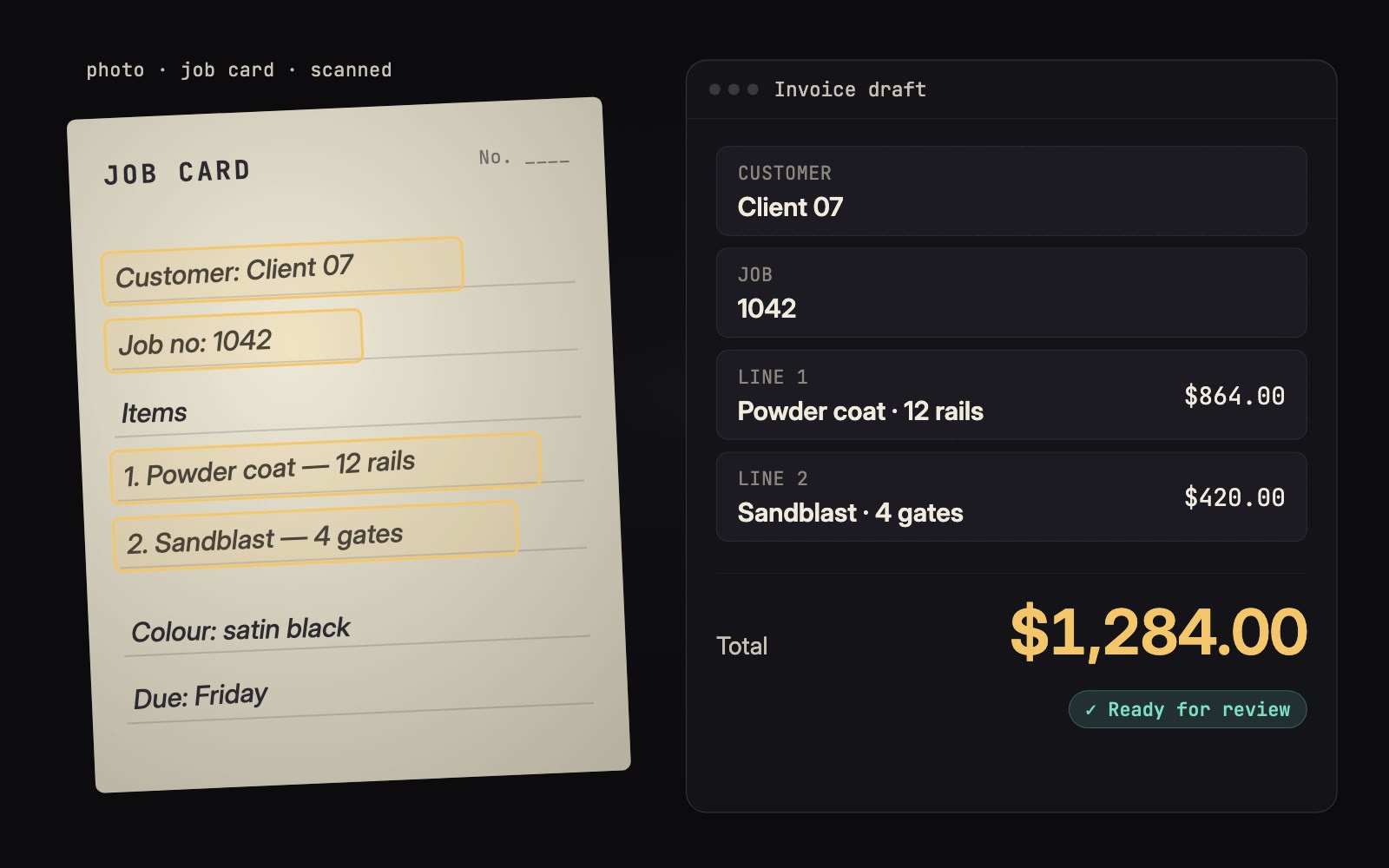
A web app the office uses from scan to invoice. Staff upload a photo or PDF of a job card. OCR reads the fields, with a second provider as a fallback. Staff review each field: approve, edit or remove it.
Then the app prices the job from the shop’s own material, powder coating and labor rules, matches the customer against the accounting system, and drafts the invoice in Xero. Four stages, in order: OCR review, pricing, customer check, final approval. Each stage records who finished it and when, and a job locks once its invoice exists. Sign-in is the shop’s Microsoft account.
The result
Office staff check numbers instead of typing them. Every invoice traces back to the card it came from. After a performance pass, pages load 40–60% faster.